



Cài đặt Steam
Đăng nhập
|
Ngôn ngữ
简体中文 (Trung giản thể)
繁體中文 (Trung phồn thể)
日本語 (Nhật)
한국어 (Hàn Quốc)
ไทย (Thái)
Български (Bulgaria)
Čeština (CH Séc)
Dansk (Đan Mạch)
Deutsch (Đức)
English (Anh)
Español - España (Tây Ban Nha - TBN)
Español - Latinoamérica (Tây Ban Nha cho Mỹ Latin)
Ελληνικά (Hy Lạp)
Français (Pháp)
Italiano (Ý)
Bahasa Indonesia (Indonesia)
Magyar (Hungary)
Nederlands (Hà Lan)
Norsk (Na Uy)
Polski (Ba Lan)
Português (Tiếng Bồ Đào Nha - BĐN)
Português - Brasil (Bồ Đào Nha - Brazil)
Română (Rumani)
Русский (Nga)
Suomi (Phần Lan)
Svenska (Thụy Điển)
Türkçe (Thổ Nhĩ Kỳ)
Українська (Ukraina)
Báo cáo lỗi dịch thuật




 Giải thưởng













On the other hand, diplomatic Civs tend to be good against scientific Civs as World Leader votes can begin as soon as anyone enters the information era, and a technological advantage in the late-game gives very little advantage to winning over City-States.
You can also try taking over the Civ's allied City-States. Be sure to start a war with the allied Civ rather than the City-State itself; declaring war directly on too many City-States gives you a penalty to influence gain.
I had this issue in one of my recent games, where I was technologically more advanced than others, and aiming for a Science Victory, but was left helpless to do anything to prevent a Diplomatic Victory by the AI, having allied itself with all CSs. It's way too expensive to bribe CSs enough to overcome an alliance that is in the upper 100s or 200s; and the quests are mostly about luck, and the relationship deteriorates too quickly. It's really such a challenge, especially at higher difficulties.
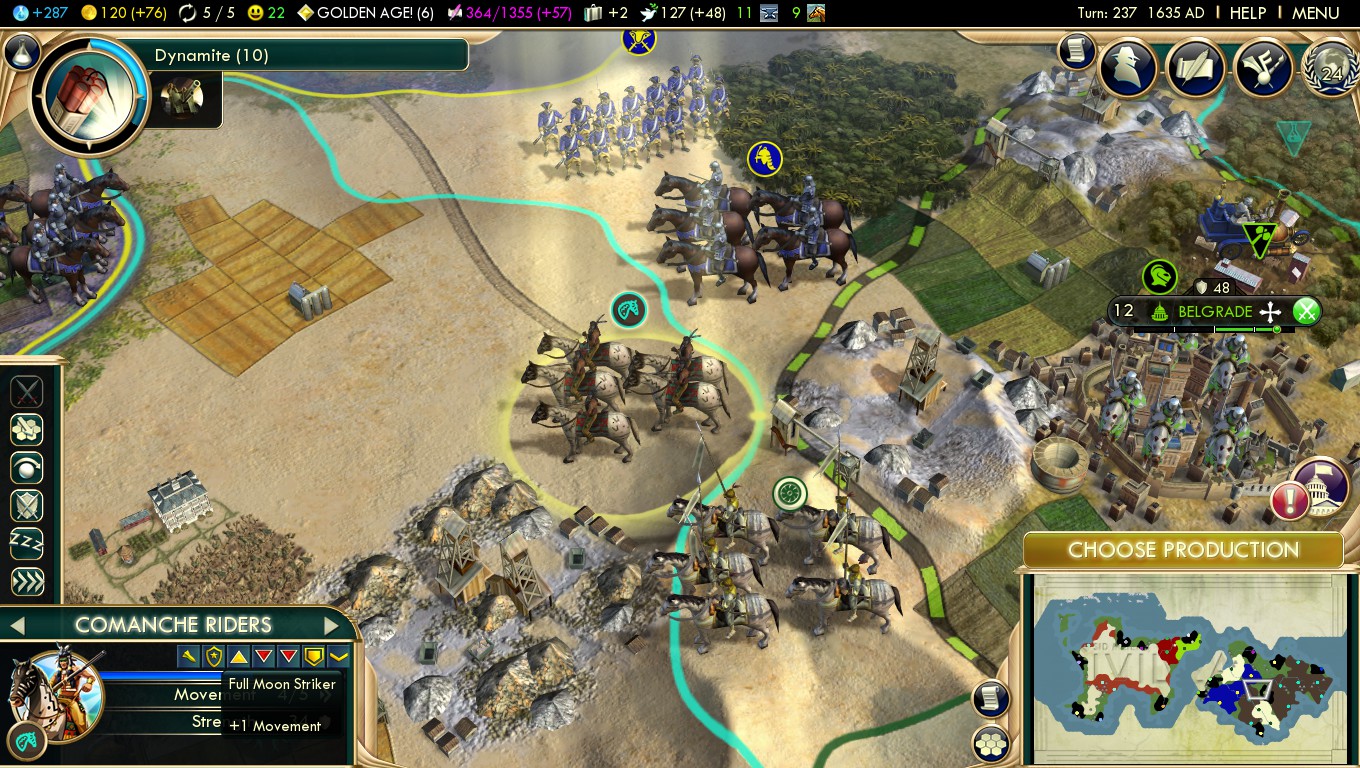
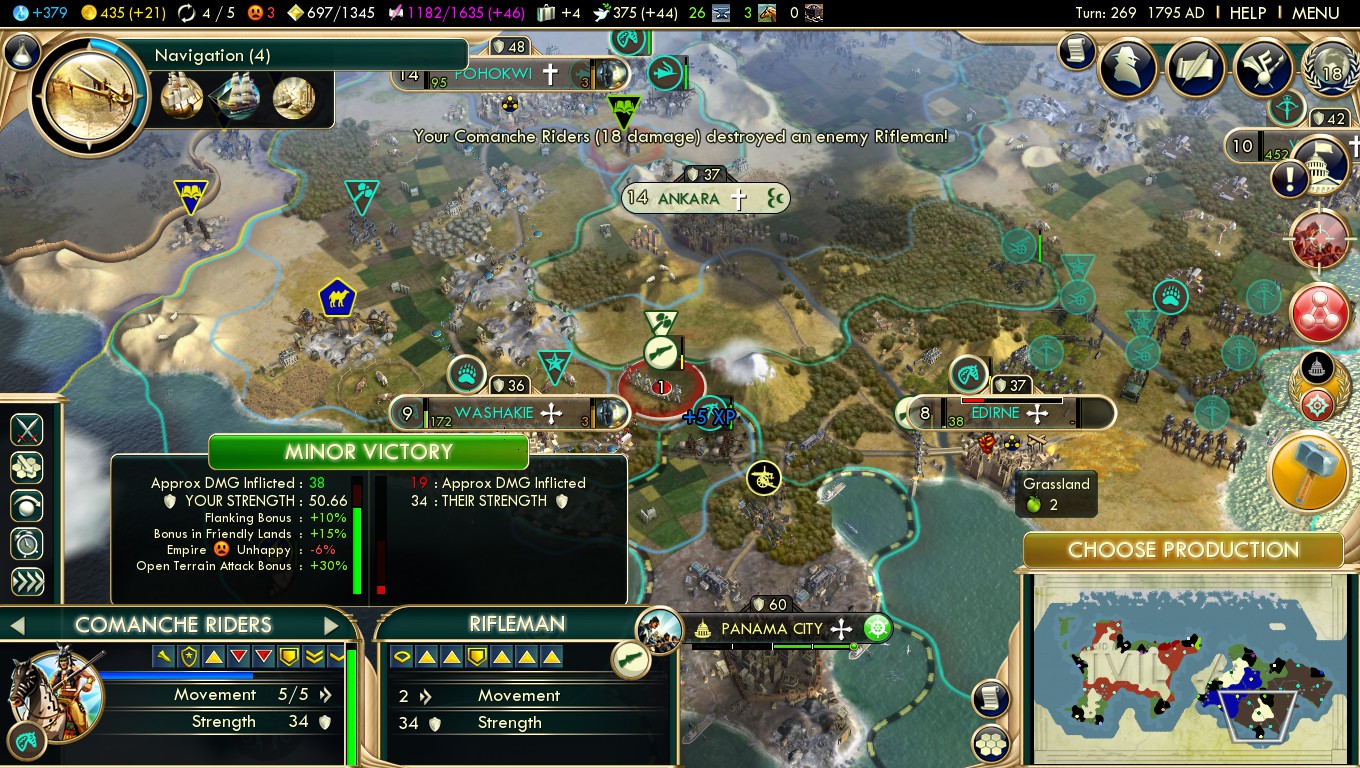
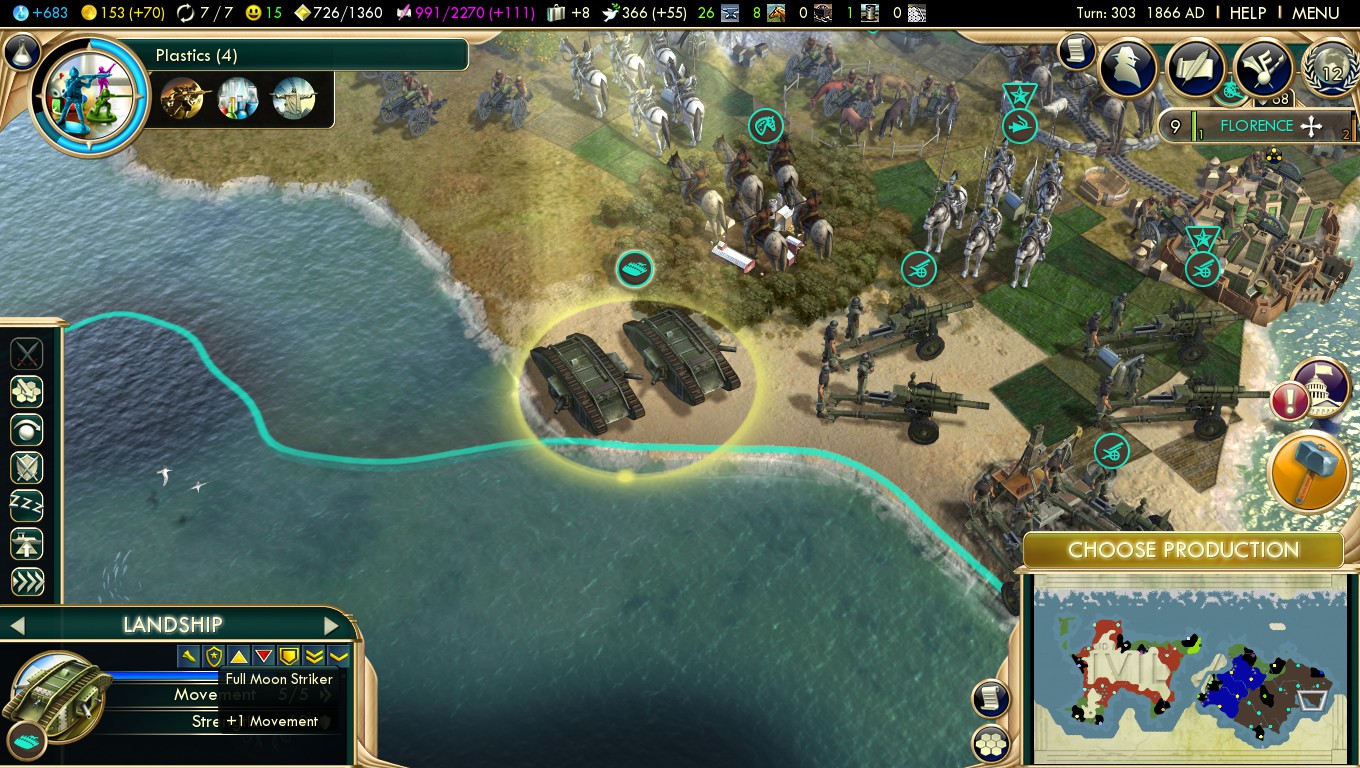
Cavalry and Tanks make less risky spotters - just move in so the city's in sight, hit it with your siege weapons and move out again.